2022–2024 · Exam-focused route
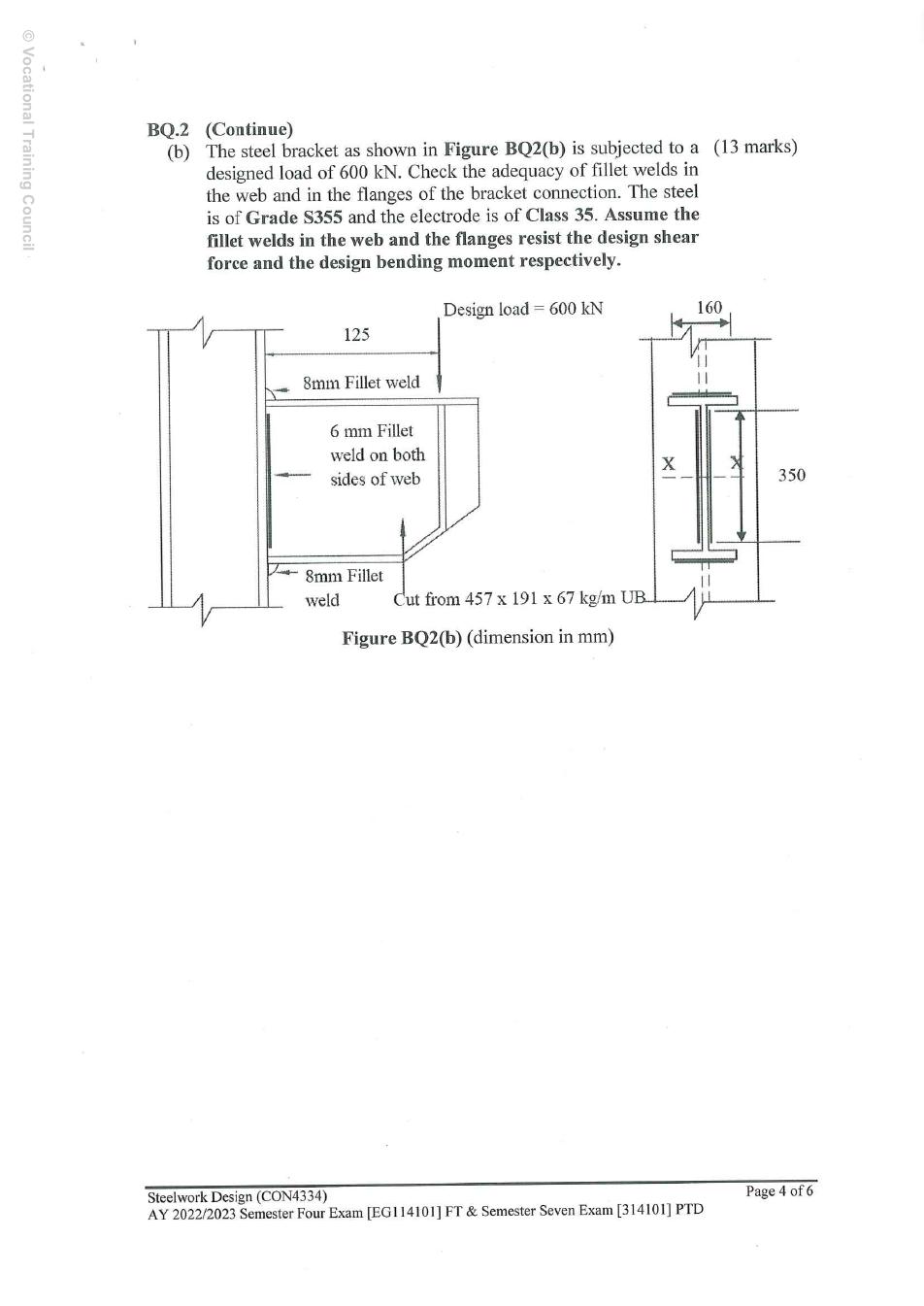
2023 FT/PTD BQ2(b) — welded UB bracket Section B · choose 2 of 3
Check the provided 6 mm and 8 mm welds under a separated shear-and-couple model.
Note: marks are as printed in the paper; the working is a teaching guide, not an official marking scheme.
Separate the web force and flange couple
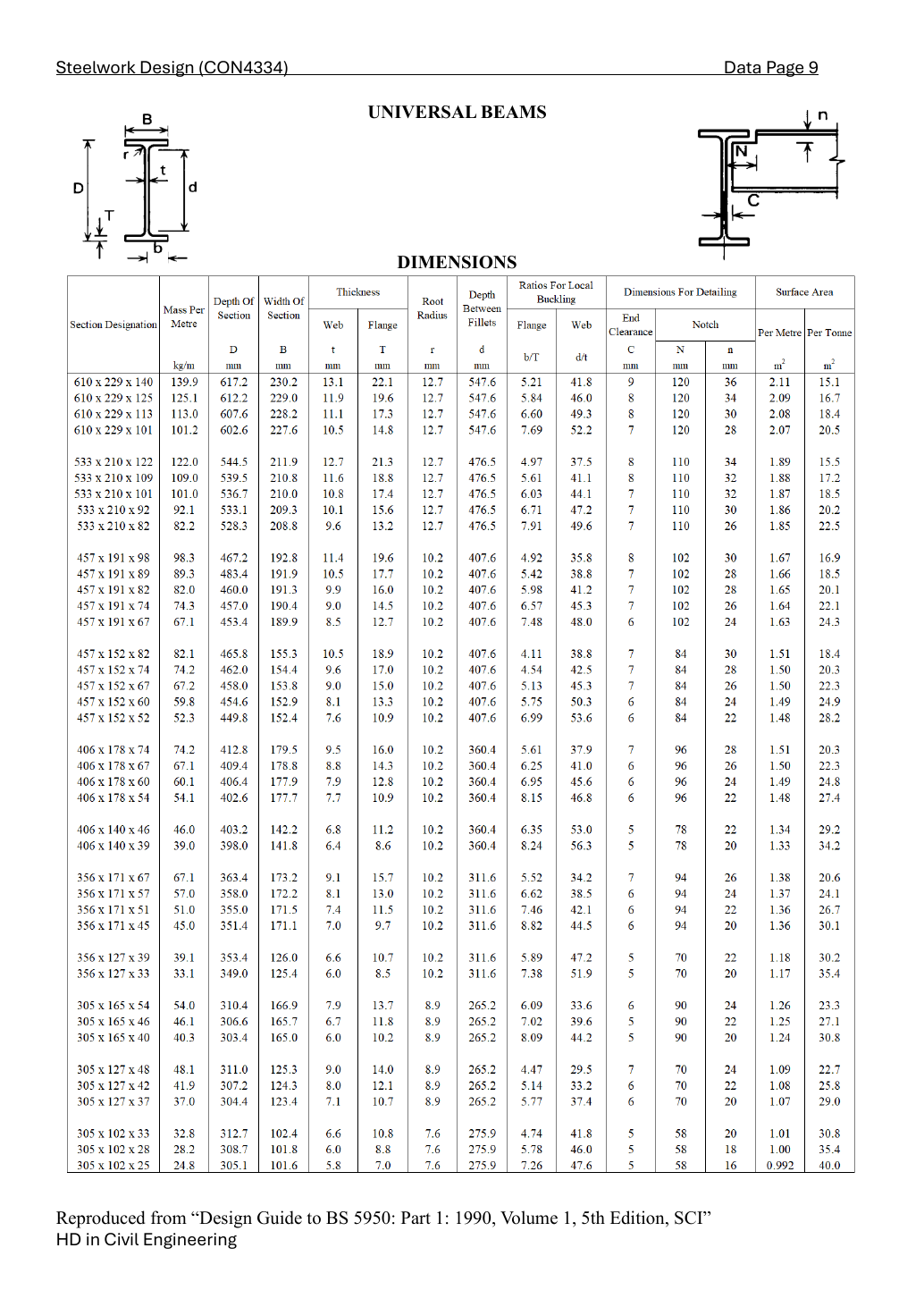
Given design force 600 kN at 125 mm from the support face; S355 bracket cut from 457 × 191 × 67 UB; Class 35 electrodes; two 6 mm web fillets of physical length 350 mm, and 8 mm flange fillets with physical length 160 mm. The 350 mm dimension labels the web weld run, not the flange-force lever arm. Use the question’s separated model: web welds carry shear, flange welds carry the moment couple.
Simple explanation — open only if needed
A door hinge analogy helps: the web connection holds the downward weight; the top and bottom flange welds push and pull as a pair to stop the bracket tipping. A longer vertical separation needs less force in each member of the pair.
BQ2(b) — check the web and flange welds [13 marks]
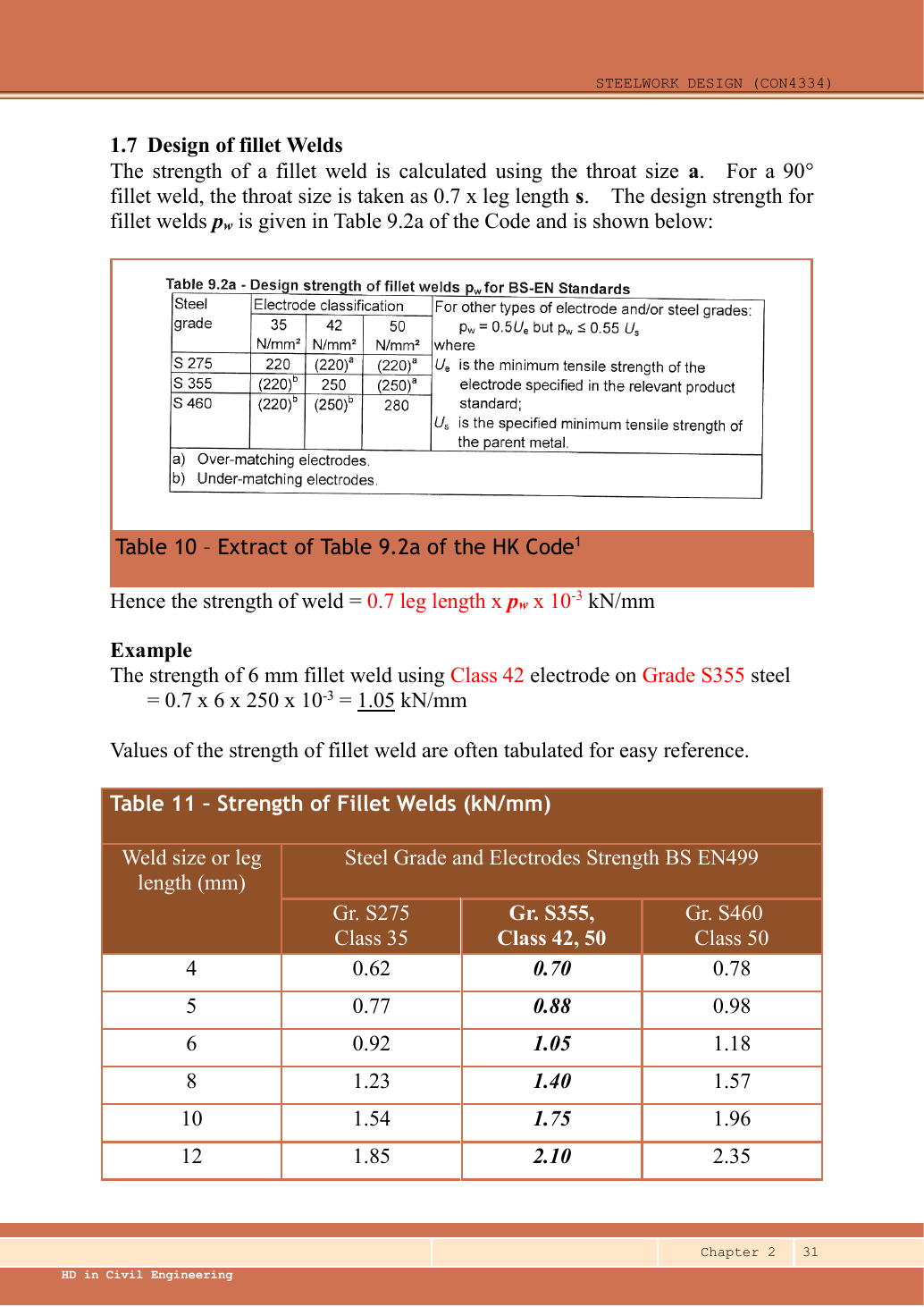
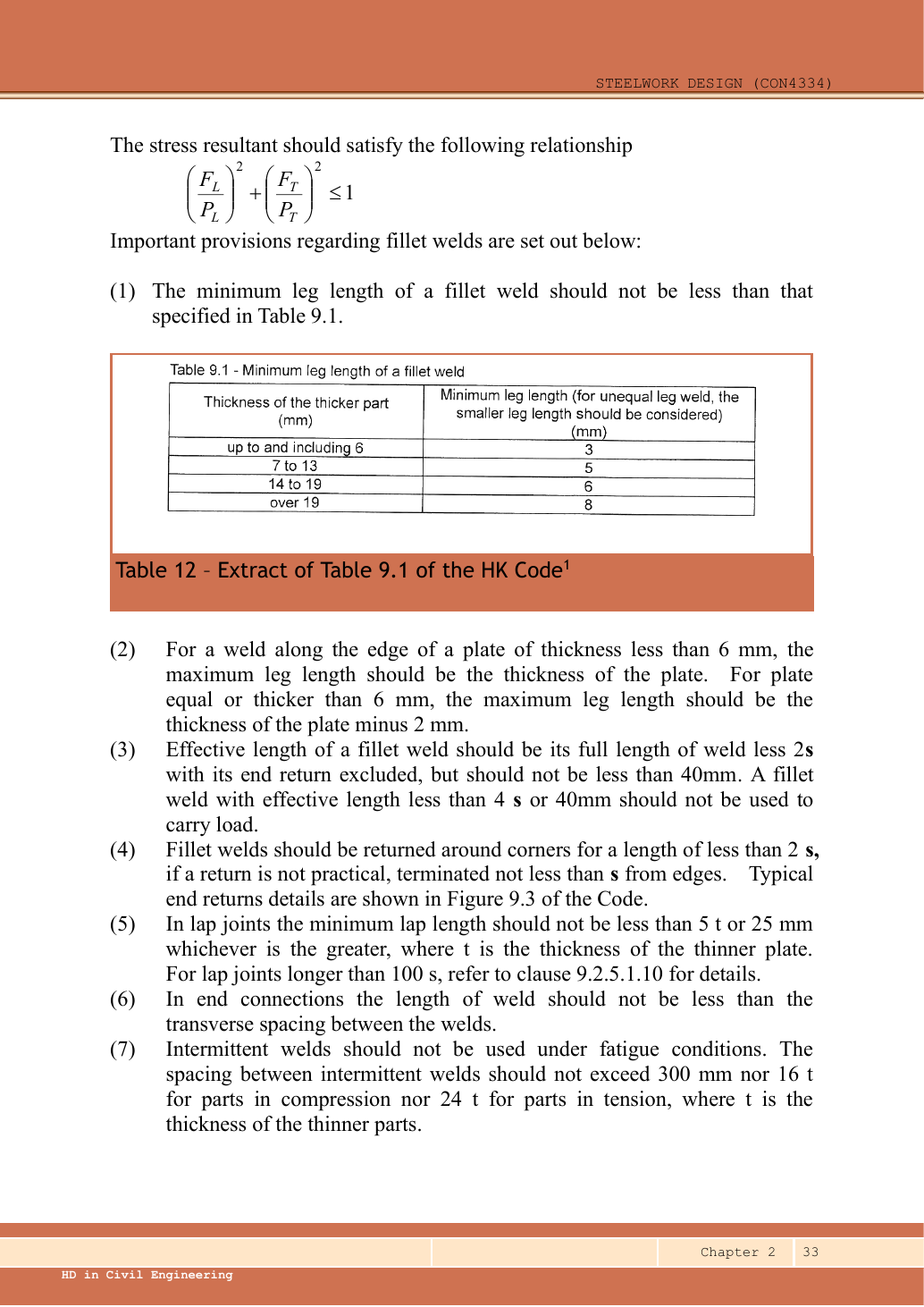
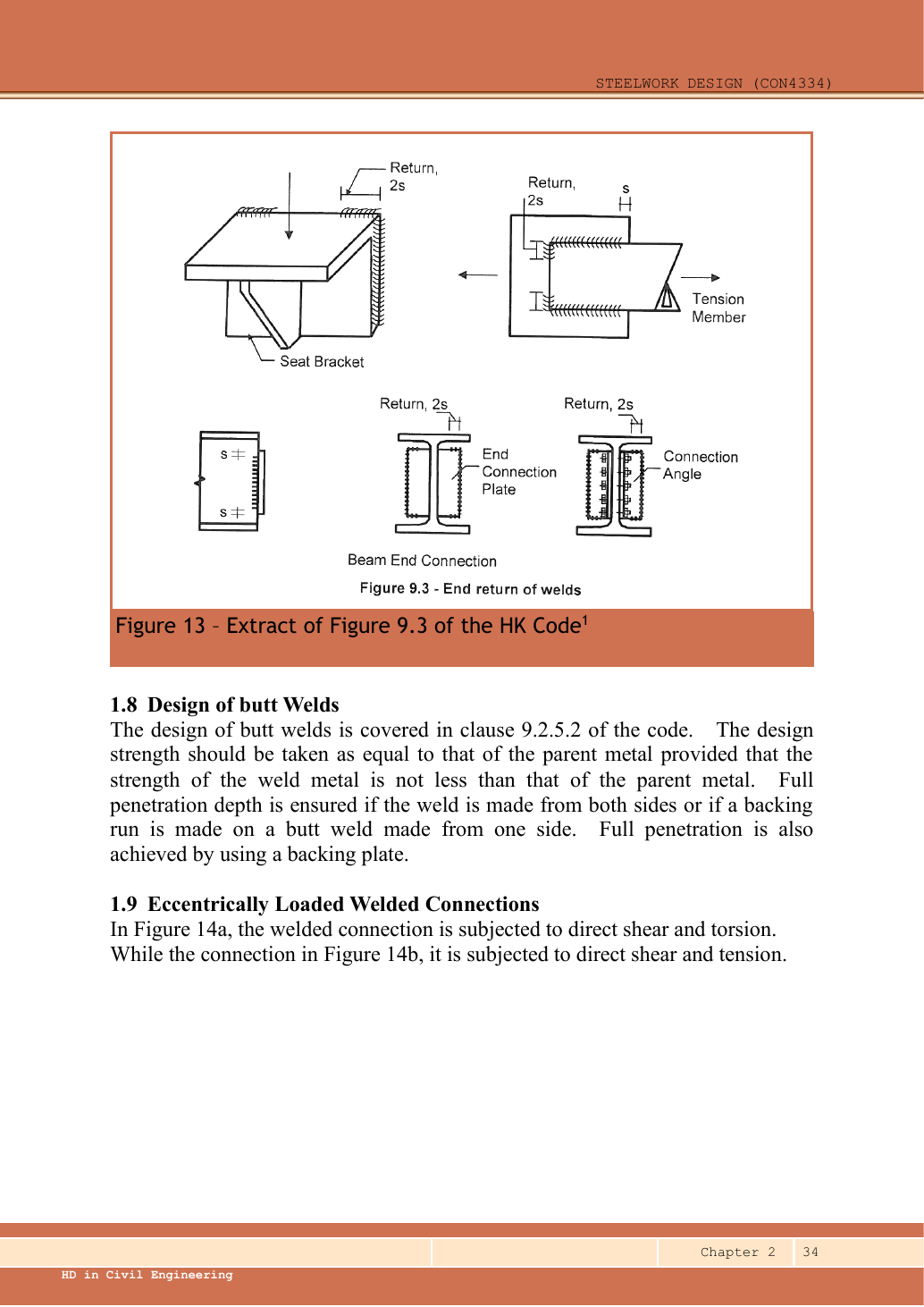
Class 35 with S355 gives pw = 220 N/mm². It is not the Class 42 value used in the other paper. For each straight physical run, the course effective length deducts twice the leg size. The web weld has two separate runs; count both after deducting each run’s ends.
Look up the exact UB dimensions: overall depth 453.4 mm, flange thickness 12.7 mm and web thickness 8.5 mm. Adopt the flange-centroid force-couple separation below. The drawing places the flange welds at the outer flanges; using the smaller flange-centroid separation is conservative for their force. The weld-centroid distance itself is not dimensioned, so make this model explicit.
The force couple already consists of a top force and an equal opposite bottom force. Each flange weld resists one force; do not divide its force by two again.
Edge-size check (leg ≤ thickness − 2): web 6 ≤ 8.5−2 = 6.5 mm and flange 8 ≤ 12.7−2 = 10.7 mm, so both are fine, and so are the effective lengths. The paper does not give the support thickness, so the minimum leg size and the support itself cannot be checked — say this in one line.
Compact exam script
Reveal the exam script
With pw=220 N/mm² and z=440.7 mm, both weld strength checks pass. State the couple model and the missing support-thickness condition.
Common mistakes
- Class 35 and Class 42 are different electrode rows.
- The labelled 350 mm is a weld-run length, not a moment arm.
- Do not use physical weld lengths as effective lengths.
Procedure for a new variant
- Assign shear to web welds and moment to the flange couple.
- Look up electrode strength and exact section dimensions.
- Deduct weld end lengths, compare each force with its own weld capacity.
Independent self-check — invented variant
Invented variant: eccentricity increases to 150 mm. Do the same welds pass?
Hint
Only the moment demand changes.
Answer and reasoning
Flange welds fail; the web shear check is unchanged and still passes.