Steelwork · Exam learning

2014–2019 · Reference answers

2016-05-11 — connection answers

All connection subparts from this paper, including the specified checks and source qualifications.

Independent teaching answer, not an official solution or marking scheme. Printed marks are retained. Read the source conditions beside each result.

Recognise the connection model

Units: 1 kN = 1,000 N; 1 m = 1,000 mm; 1 cm³ = 1,000 mm³; 1 cm⁴ = 10,000 mm⁴. A demand is the load effect; a resistance is what the member can carry. Compare matching units.

A splice transfers axial force through stages. A side-plate bracket creates in-plane torsion. An end-plate bracket creates bolt tension. Identify which picture applies before selecting a formula.

Bolt shear [3 marks]

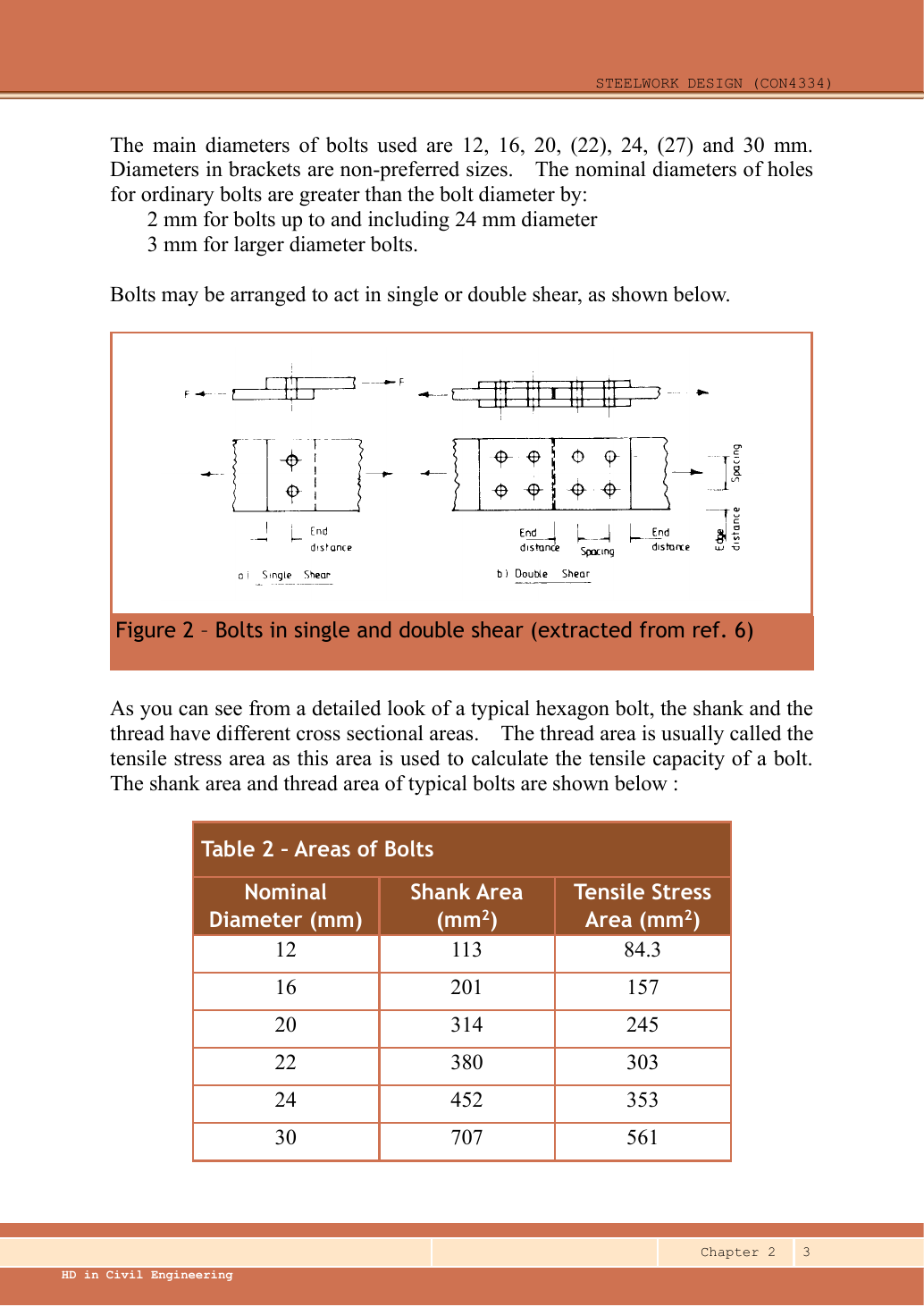
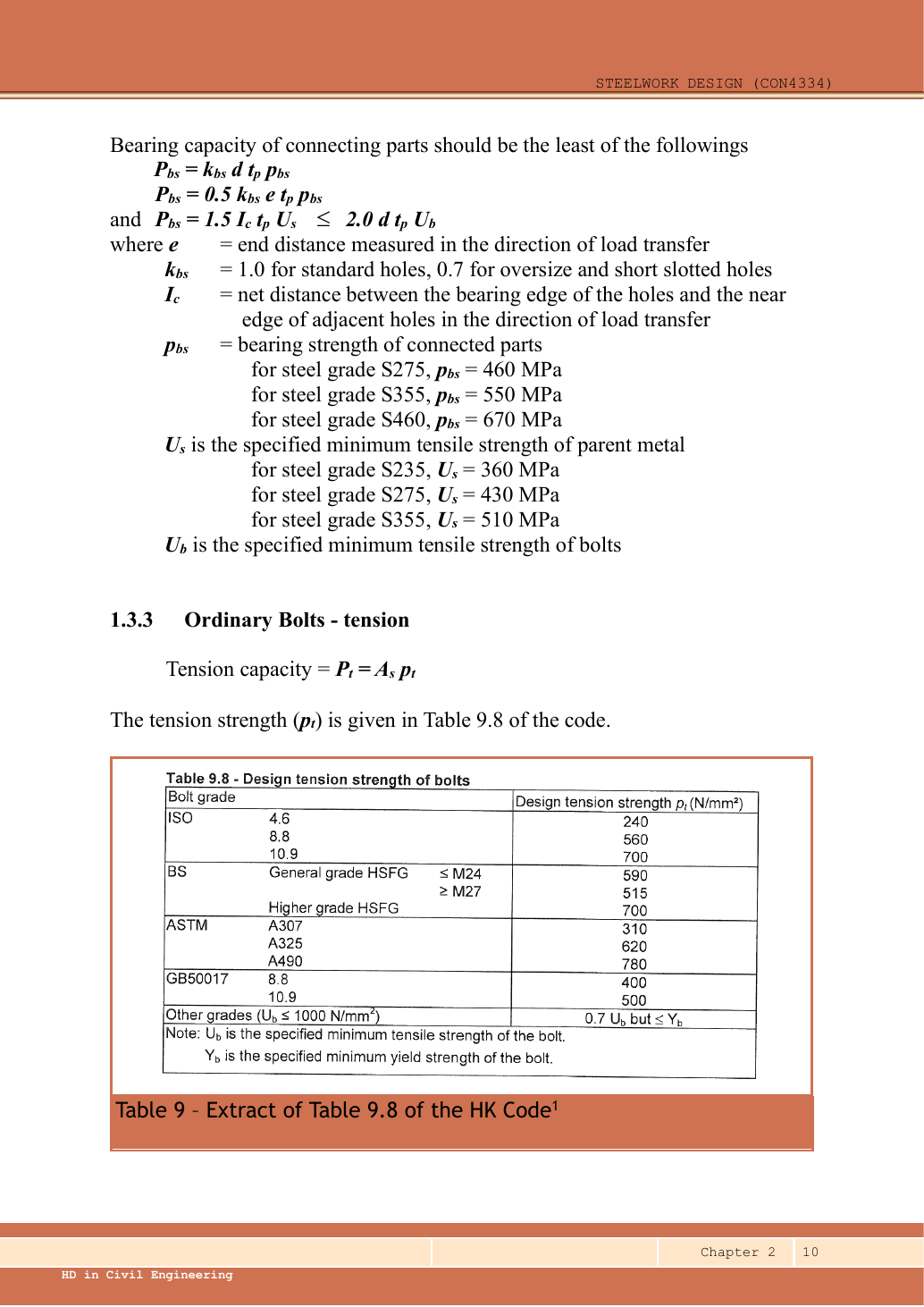
Given main plate 16 mm, two covers each 10 mm, Grade 8.8 M12 bolts with 14 mm holes. The transverse dimension chain gives main width 190 mm and cover width 170 mm. Count 4 bolts on ONE side of the butt. The other side is in series and does not double the transferable force.

Source: LectureNotes/Ch2_Connection.pdf · p.3, p.4, p.5, p.9, p.10
Source: LectureNotes/CON4334-Data File-20260730.pdf · p.1, p.4

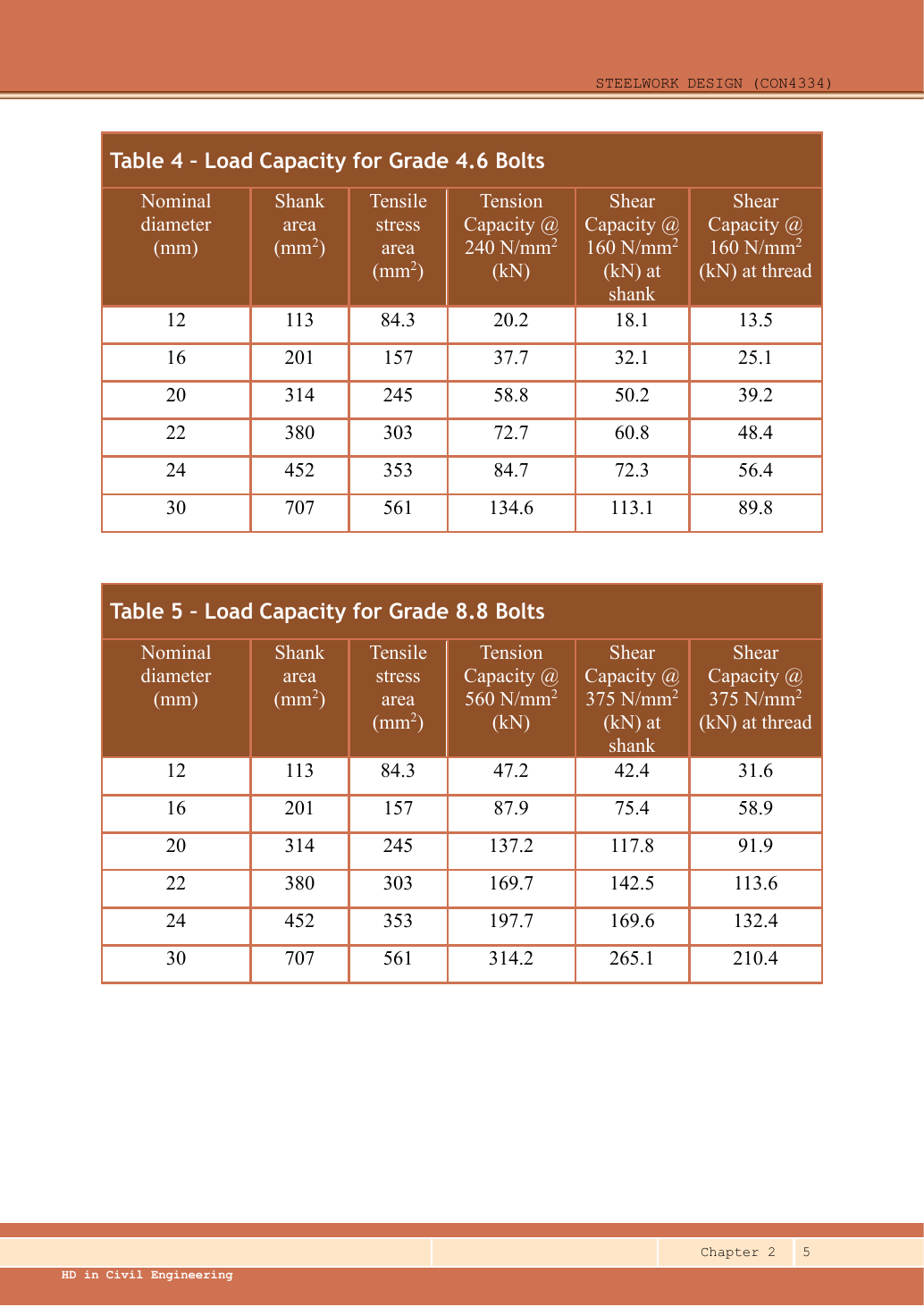
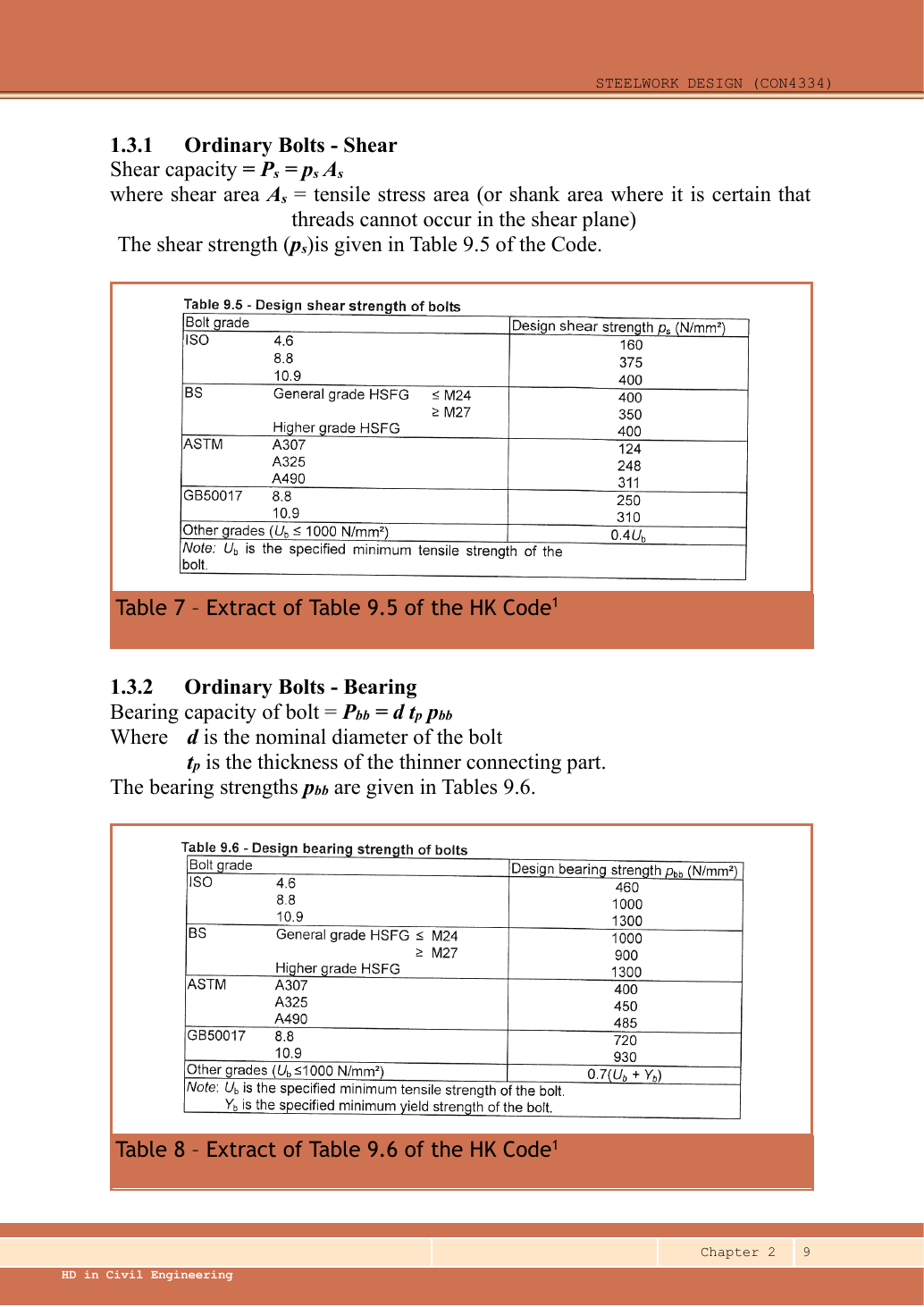
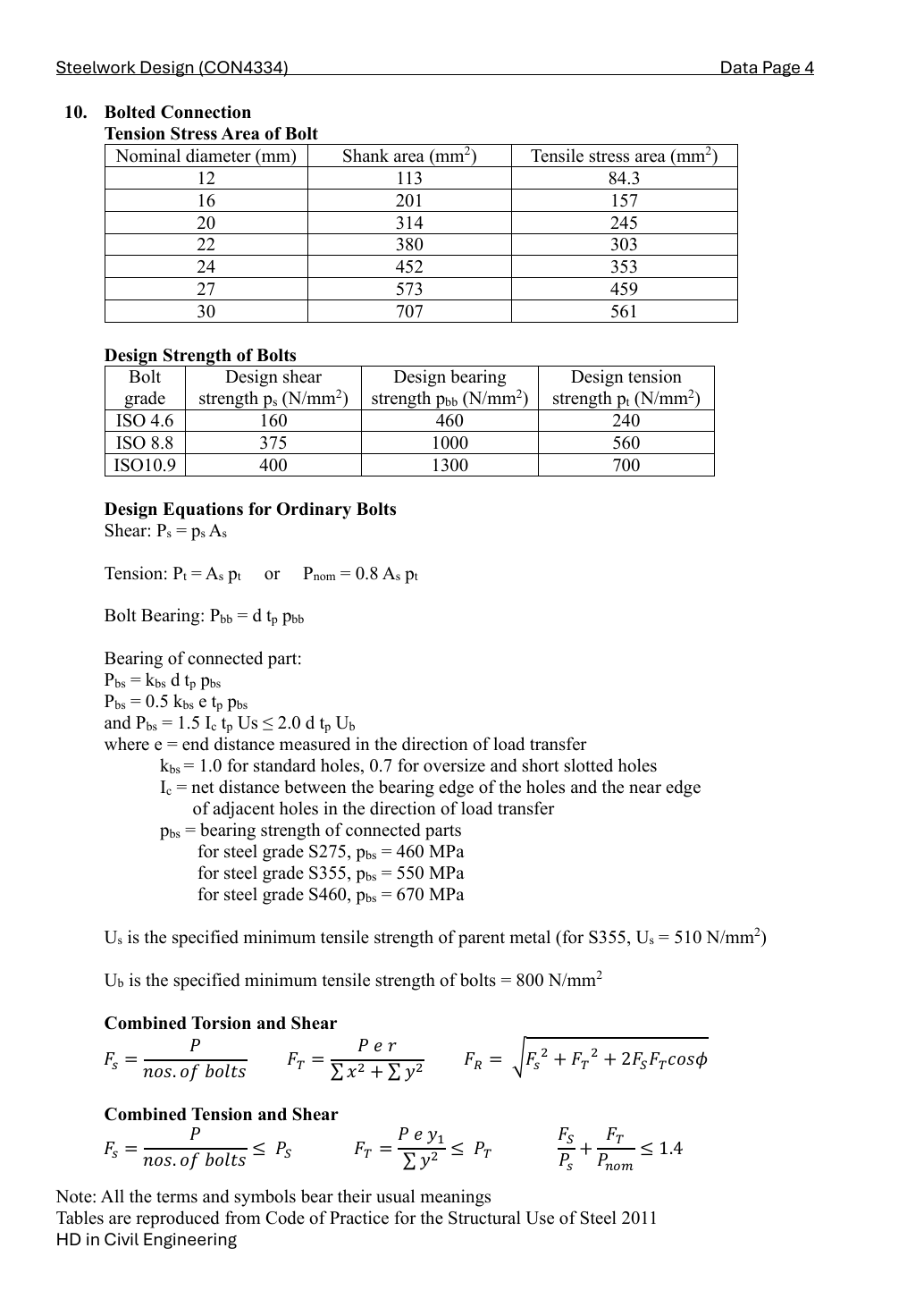
Grade 8.8: shear strength ps = 375, bolt bearing pbb = 1000, ultimate bolt strength Ub = 800 N/mm². S355 plate: pbs = 550, Us = 510 N/mm², Ke = 1.1. Use threaded stress area As for the conservative shear plane, nominal d for bearing, and hole diameter d0 for material removed.

Simple explanation — open only if needed

The force must cross the left bolt group, travel through the covers, then cross the right group. The weakest stage limits the whole splice, like the weakest link in a chain.

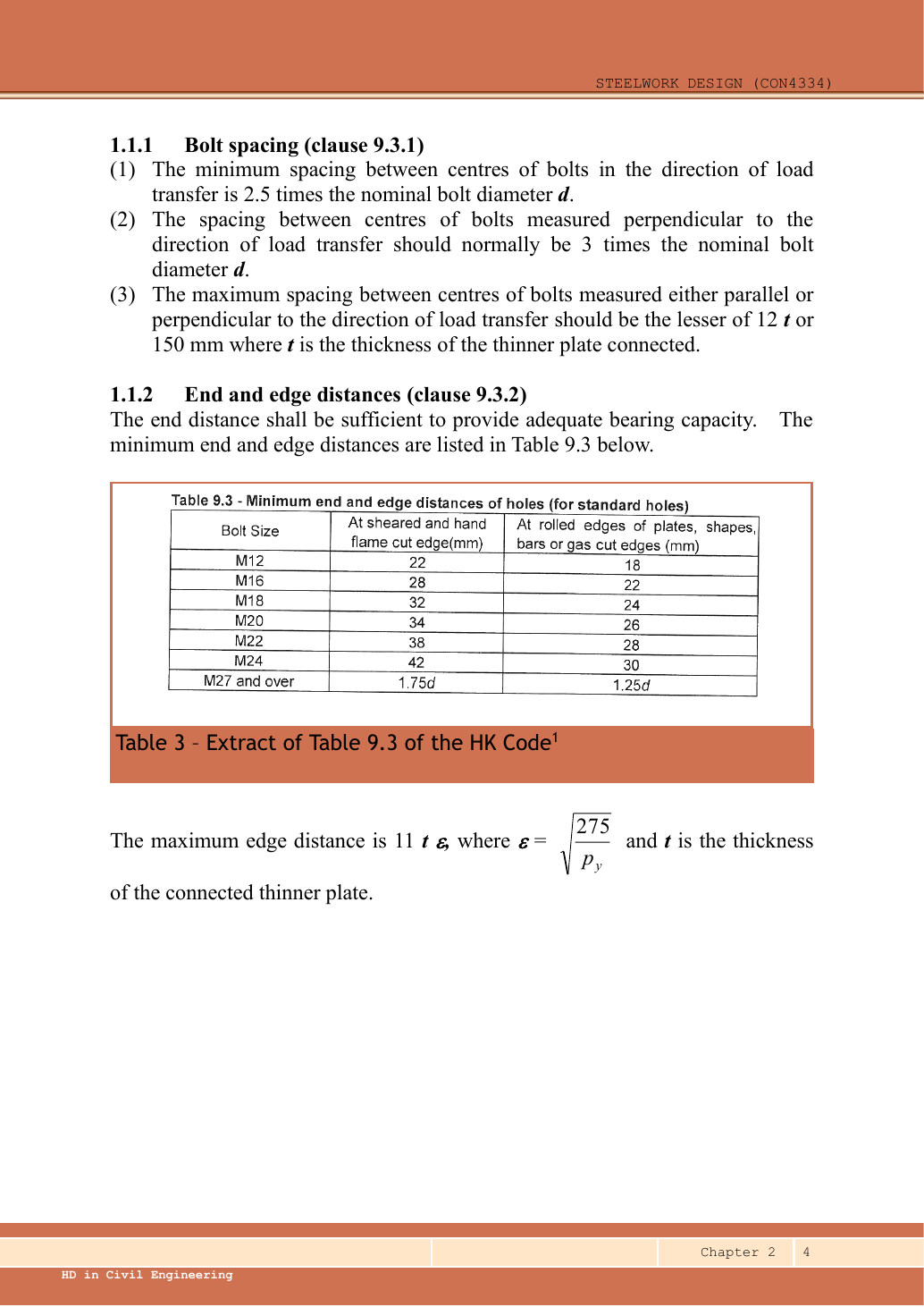
This checks the requested resistance modes. Check edge preparation and ordinary minimum pitch separately; a bearing pass alone does not prove all detailing.

Ps,plane=Asps/1000=84.3(375)/1000=31.6125 kNP_{s,plane}=A_sp_s/1000=84.3(375)/1000=31.6125\,\mathrm{kN}
Ps,bolt=2(31.6125)=63.225 kN,Rs=4(2)(31.6125)=252.9 kNP_{s,bolt}=2(31.6125)=63.225\,\mathrm{kN},\quad R_s=4(2)(31.6125)=252.9\,\mathrm{kN}

Each bolt has two shear planes, one at each cover/main interface.

Compact exam answer — key result lines
Ps,plane=Asps/1000=84.3(375)/1000=31.6125 kNP_{s,plane}=A_sp_s/1000=84.3(375)/1000=31.6125\,\mathrm{kN}
Ps,bolt=2(31.6125)=63.225 kN,Rs=4(2)(31.6125)=252.9 kNP_{s,bolt}=2(31.6125)=63.225\,\mathrm{kN},\quad R_s=4(2)(31.6125)=252.9\,\mathrm{kN}

Each bolt has two shear planes, one at each cover/main interface.

Bolt bearing [3 marks]

tbearing=min⁡(16,2(10))=16 mmt_{bearing}=\min(16,2(10))=16\,\mathrm{mm}
Pbb=dtbearingpbb/1000=12(16)(1000)/1000=192 kN/boltP_{bb}=dt_{bearing}p_{bb}/1000=12(16)(1000)/1000=192\,\mathrm{kN/bolt}
Rbb=4(192)=768 kNR_{bb}=4(192)=768\,\mathrm{kN}
Compact exam answer — key result lines
tbearing=min⁡(16,2(10))=16 mmt_{bearing}=\min(16,2(10))=16\,\mathrm{mm}
Pbb=dtbearingpbb/1000=12(16)(1000)/1000=192 kN/boltP_{bb}=dt_{bearing}p_{bb}/1000=12(16)(1000)/1000=192\,\mathrm{kN/bolt}
Rbb=4(192)=768 kNR_{bb}=4(192)=768\,\mathrm{kN}

Plate bearing [5 marks]

Main plate

Rbs=min⁡(dtpbs,0.5etpbs,1.5lctUs,2dtUb)/1000R_{bs}=\min(dt p_{bs},0.5etp_{bs},1.5l_ctU_s,2dtU_b)/1000
lc=p−d0=70−14=56 mml_c=p-d_0=70-14=56\,\mathrm{mm}
Rbs=min⁡(12(16)(550),0.5(50)(16)(550),1.5(56)(16)(510),2(12)(16)(800))/1000R_{bs}=\min(12(16)(550),0.5(50)(16)(550),1.5(56)(16)(510),2(12)(16)(800))/1000
Rbs=min⁡(105.6,220,685.44,307.2)=105.6 kN/boltR_{bs}=\min(105.6,220,685.44,307.2)=105.6\,\mathrm{kN/bolt}

Each cover plate

Rbs=min⁡(dtpbs,0.5etpbs,1.5lctUs,2dtUb)/1000R_{bs}=\min(dt p_{bs},0.5etp_{bs},1.5l_ctU_s,2dtU_b)/1000
lc=p−d0=70−14=56 mml_c=p-d_0=70-14=56\,\mathrm{mm}
Rbs=min⁡(12(10)(550),0.5(50)(10)(550),1.5(56)(10)(510),2(12)(10)(800))/1000R_{bs}=\min(12(10)(550),0.5(50)(10)(550),1.5(56)(10)(510),2(12)(10)(800))/1000
Rbs=min⁡(66,137.5,428.4,192)=66 kN/boltR_{bs}=\min(66,137.5,428.4,192)=66\,\mathrm{kN/bolt}
Rmain,bearing=4(105.6)=422.4 kN,Rcovers,bearing=2(4)(66)=528 kNR_{main,bearing}=4(105.6)=422.4\,\mathrm{kN},\quad R_{covers,bearing}=2(4)(66)=528\,\mathrm{kN}
Compact exam answer — key result lines
Rbs=min⁡(dtpbs,0.5etpbs,1.5lctUs,2dtUb)/1000R_{bs}=\min(dt p_{bs},0.5etp_{bs},1.5l_ctU_s,2dtU_b)/1000
lc=p−d0=70−14=56 mml_c=p-d_0=70-14=56\,\mathrm{mm}
Rbs=min⁡(12(10)(550),0.5(50)(10)(550),1.5(56)(10)(510),2(12)(10)(800))/1000R_{bs}=\min(12(10)(550),0.5(50)(10)(550),1.5(56)(10)(510),2(12)(10)(800))/1000
Rbs=min⁡(66,137.5,428.4,192)=66 kN/boltR_{bs}=\min(66,137.5,428.4,192)=66\,\mathrm{kN/bolt}
Rmain,bearing=4(105.6)=422.4 kN,Rcovers,bearing=2(4)(66)=528 kNR_{main,bearing}=4(105.6)=422.4\,\mathrm{kN},\quad R_{covers,bearing}=2(4)(66)=528\,\mathrm{kN}

Each cover plate

Main plate tension [3 marks]

Main plate, two holes across the critical transverse section.

Ag=bt=190(16)=3040 mm2,An=(b−2d0)t=(190−2(14))(16)=2592 mm2A_g=bt=190(16)=3040\,\mathrm{mm^2},\quad A_n=(b-2d_0)t=(190-2(14))(16)=2592\,\mathrm{mm^2}
Ae=min⁡(Ag,KeAn)=min⁡(3040,1.1(2592))=2851.2 mm2A_e=\min(A_g,K_eA_n)=\min(3040,1.1(2592))=2851.2\,\mathrm{mm^2}
Pt=pyAe/1000=355(2851.2)/1000=1012.176 kNP_t=p_yA_e/1000=355(2851.2)/1000=1012.176\,\mathrm{kN}
Compact exam answer — key result lines
Ag=bt=190(16)=3040 mm2,An=(b−2d0)t=(190−2(14))(16)=2592 mm2A_g=bt=190(16)=3040\,\mathrm{mm^2},\quad A_n=(b-2d_0)t=(190-2(14))(16)=2592\,\mathrm{mm^2}
Ae=min⁡(Ag,KeAn)=min⁡(3040,1.1(2592))=2851.2 mm2A_e=\min(A_g,K_eA_n)=\min(3040,1.1(2592))=2851.2\,\mathrm{mm^2}
Pt=pyAe/1000=355(2851.2)/1000=1012.176 kNP_t=p_yA_e/1000=355(2851.2)/1000=1012.176\,\mathrm{kN}

Main plate, two holes across the critical transverse section.

Cover plate tension [3 marks]

Each cover plate: use its own width and thickness.

Ag=bt=170(10)=1700 mm2,An=(b−2d0)t=(170−2(14))(10)=1420 mm2A_g=bt=170(10)=1700\,\mathrm{mm^2},\quad A_n=(b-2d_0)t=(170-2(14))(10)=1420\,\mathrm{mm^2}
Ae=min⁡(Ag,KeAn)=min⁡(1700,1.1(1420))=1562 mm2A_e=\min(A_g,K_eA_n)=\min(1700,1.1(1420))=1562\,\mathrm{mm^2}
Pt=pyAe/1000=355(1562)/1000=554.51 kNP_t=p_yA_e/1000=355(1562)/1000=554.51\,\mathrm{kN}
Pt,covers=2(554.51)=1109.02 kNP_{t,covers}=2(554.51)=1109.02\,\mathrm{kN}
Compact exam answer — key result lines
Ag=bt=170(10)=1700 mm2,An=(b−2d0)t=(170−2(14))(10)=1420 mm2A_g=bt=170(10)=1700\,\mathrm{mm^2},\quad A_n=(b-2d_0)t=(170-2(14))(10)=1420\,\mathrm{mm^2}
Ae=min⁡(Ag,KeAn)=min⁡(1700,1.1(1420))=1562 mm2A_e=\min(A_g,K_eA_n)=\min(1700,1.1(1420))=1562\,\mathrm{mm^2}
Pt=pyAe/1000=355(1562)/1000=554.51 kNP_t=p_yA_e/1000=355(1562)/1000=554.51\,\mathrm{kN}
Pt,covers=2(554.51)=1109.02 kNP_{t,covers}=2(554.51)=1109.02\,\mathrm{kN}

Each cover plate: use its own width and thickness.

Failure mode [1 marks]

Rsplice=min⁡(252.9,768,422.4,528,1012.176,1109.02)=252.9 kNR_{splice}=\min(252.9,768,422.4,528,1012.176,1109.02)=252.9\,\mathrm{kN}
P=300 kN,P/Rsplice=1.18624P=300\,\mathrm{kN},\quad P/R_{splice}=1.18624

FAIL

The governing mode is bolt shear: 300 kN exceeds the four-bolt double-shear group resistance.

Compact exam answer — key result lines
Rsplice=min⁡(252.9,768,422.4,528,1012.176,1109.02)=252.9 kNR_{splice}=\min(252.9,768,422.4,528,1012.176,1109.02)=252.9\,\mathrm{kN}
P=300 kN,P/Rsplice=1.18624P=300\,\mathrm{kN},\quad P/R_{splice}=1.18624

The governing mode is bolt shear: 300 kN exceeds the four-bolt double-shear group resistance.

UB bracket welds [12 marks]

Source: LectureNotes/Ch2_Connection.pdf · p.31, p.33, p.41
Source: LectureNotes/CON4334-Data File-20260730.pdf · p.9, p.10

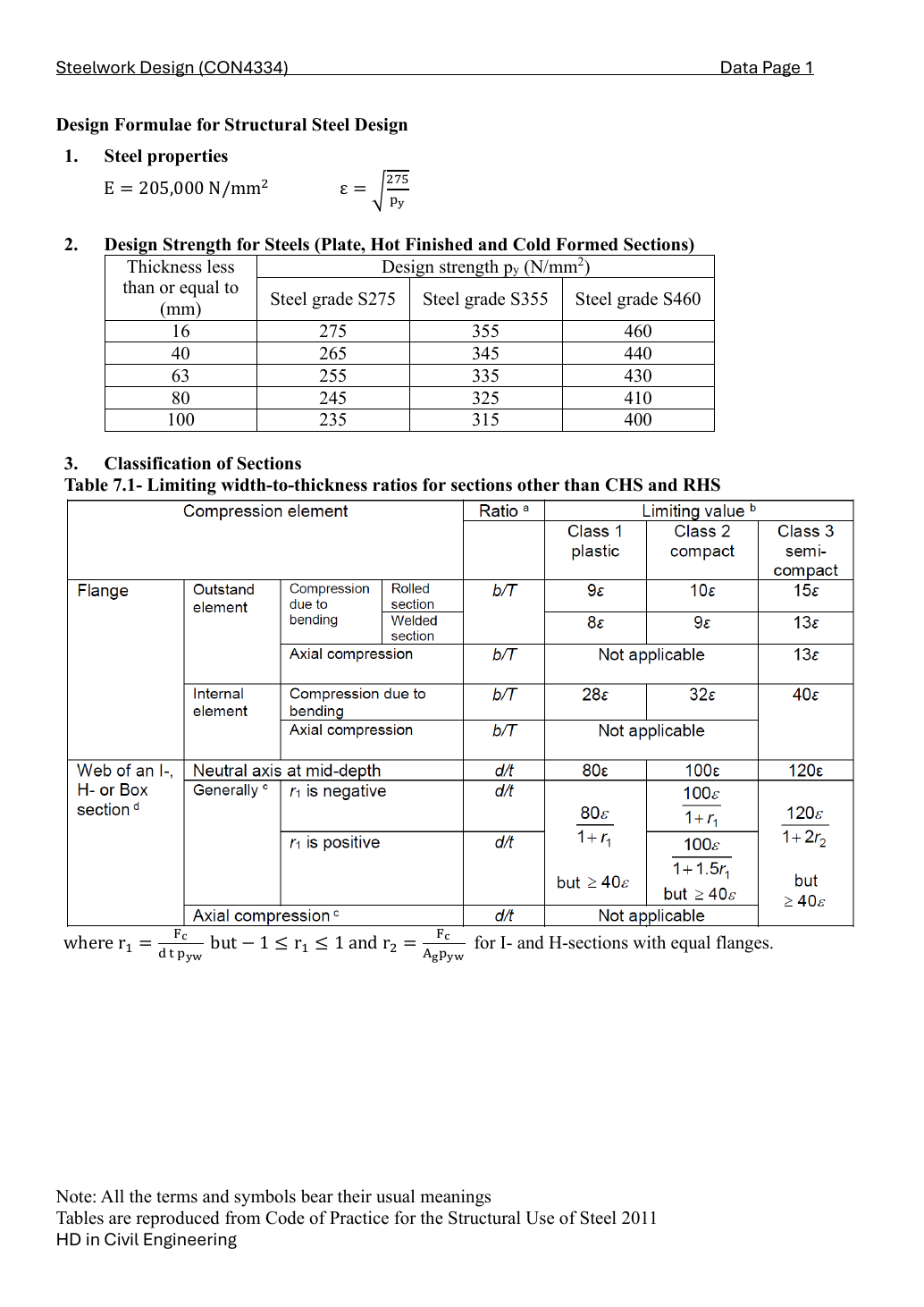
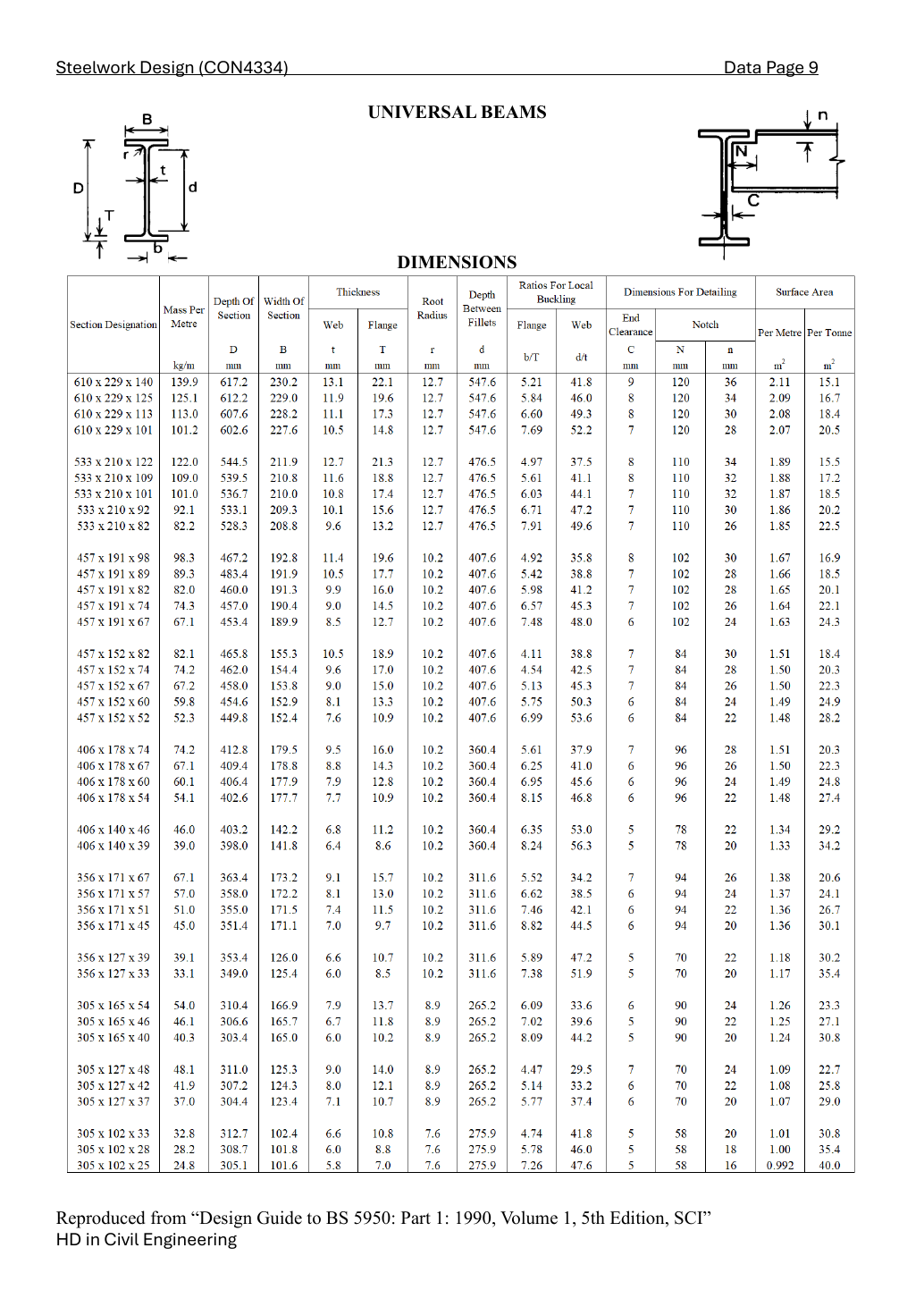
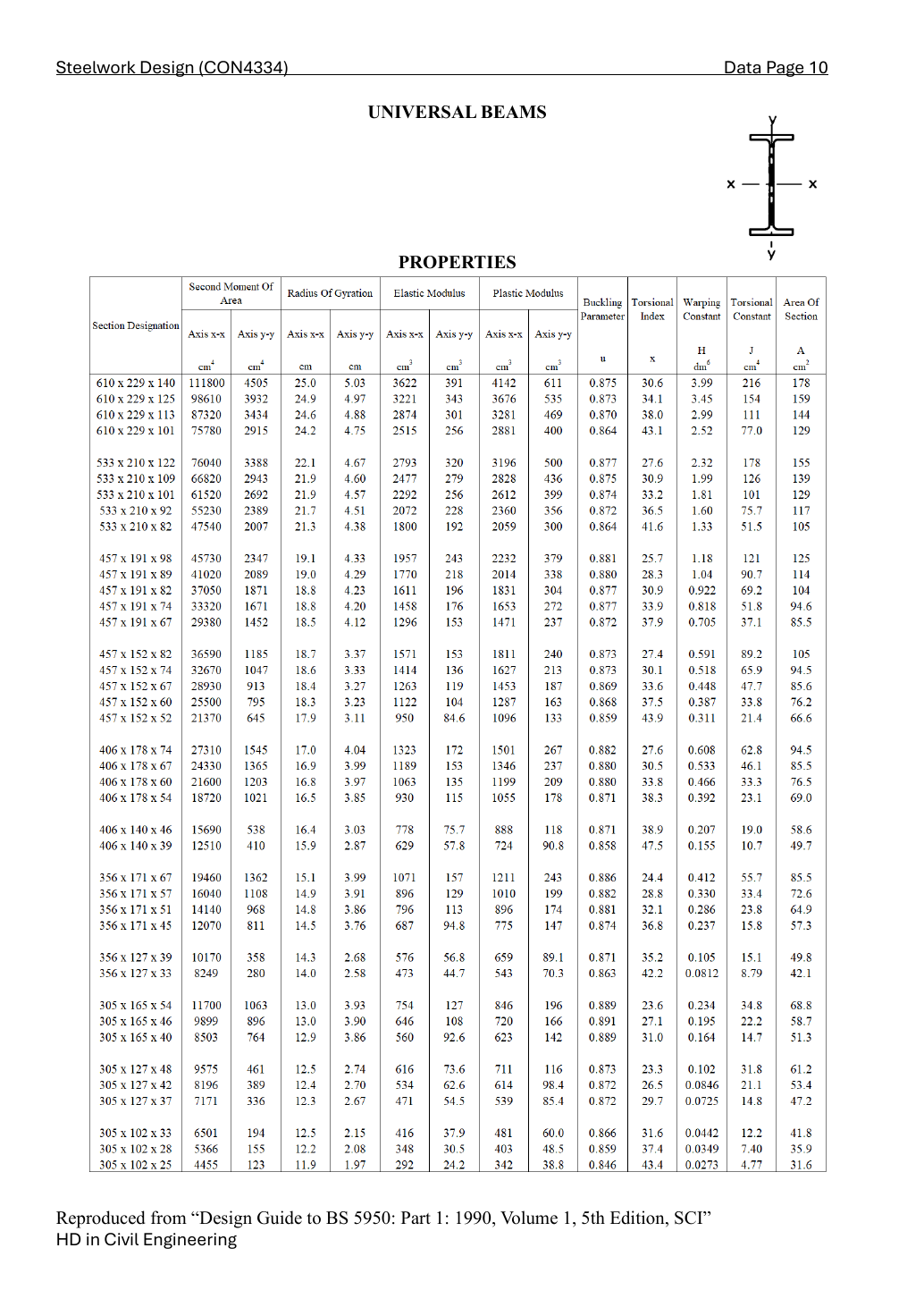
Lookup the exact 305 × 127 × 37 UB row. Read dimensions first, properties second. D = overall depth; t = web thickness; T = flange thickness; d = clear web depth. The designation is not an exact dimension.

D=304.4, t=7.1, T=10.7, d=265.2(mm)D=304.4,\ t=7.1,\ T=10.7,\ d=265.2\quad(\mathrm{mm})
b/T=5.77, d/t=37.4, Ix=7171 cm4, Zx=471 cm3, Sx=539 cm3b/T=5.77,\ d/t=37.4,\ I_x=7171\,\mathrm{cm^4},\ Z_x=471\,\mathrm{cm^3},\ S_x=539\,\mathrm{cm^3}
ry=26.7 mm,u=0.872,x=29.7r_y=26.7\,\mathrm{mm},\quad u=0.872,\quad x=29.7

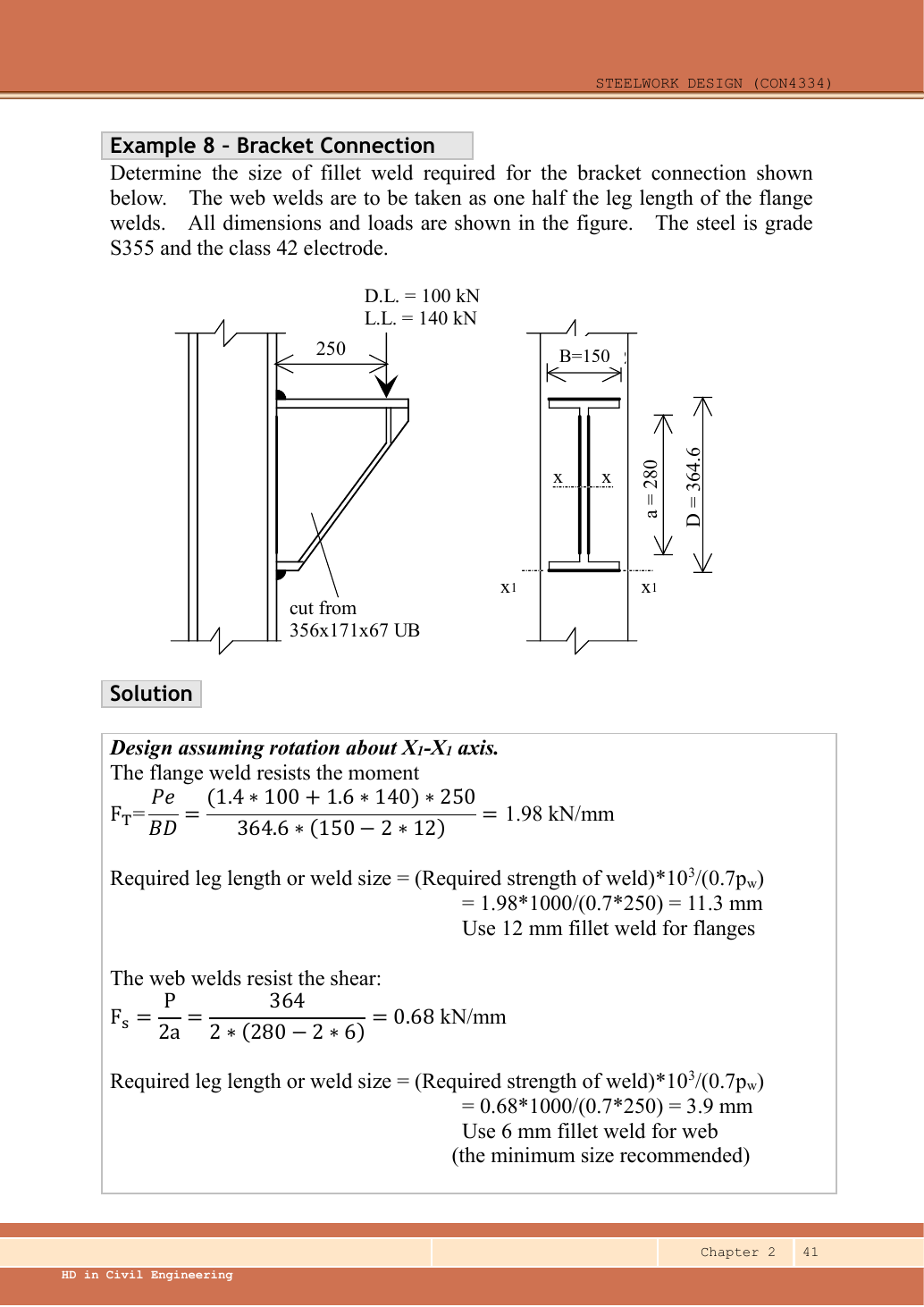
Follow the specified separated model: the two web welds carry all shear; the upper and lower flange welds form a force couple carrying moment. The web-weld length is not the couple arm. Use the smaller flange-centroid separation D−T conservatively because the exact weld-centroid spacing is not dimensioned.

P=252 kN,M=Pe=252(200)=50400 kN mmP=252\,\mathrm{kN},\quad M=Pe=252(200)=50400\,\mathrm{kN\,mm}
z=D−T=304.4−10.7=293.7 mm,Ff=M/z=50400/293.7=171.603677 kNz=D-T=304.4-10.7=293.7\,\mathrm{mm},\quad F_f=M/z=50400/293.7=171.603677\,\mathrm{kN}
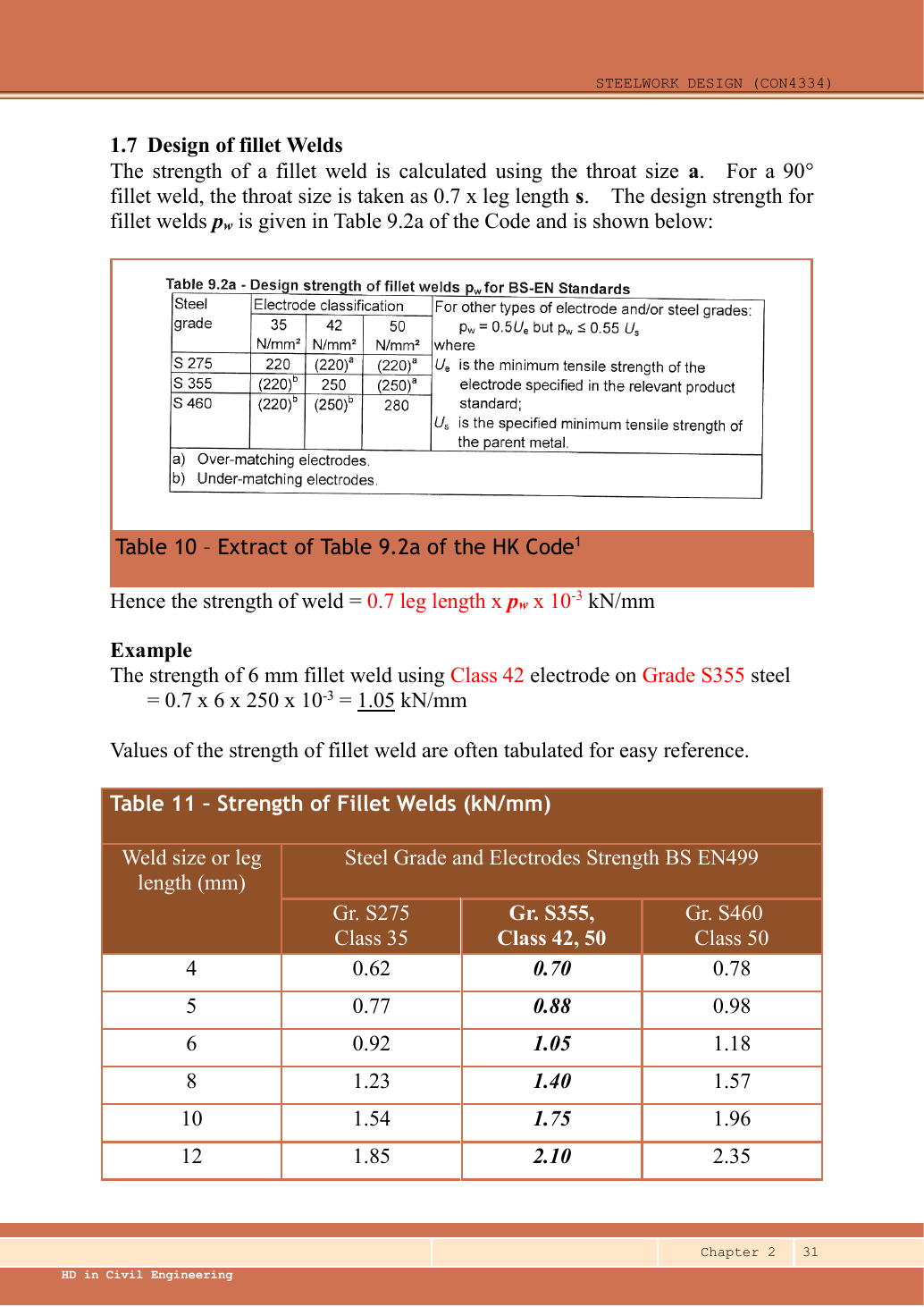
Vw,Rd=2(250−2(6))(0.7)(6)(250)/1000=499.8 kNV_{w,Rd}=2(250-2(6))(0.7)(6)(250)/1000=499.8\,\mathrm{kN}

PASS

Ff,Rd=(120−2(10))(0.7)(10)(250)/1000=175 kNF_{f,Rd}=(120-2(10))(0.7)(10)(250)/1000=175\,\mathrm{kN}

PASS

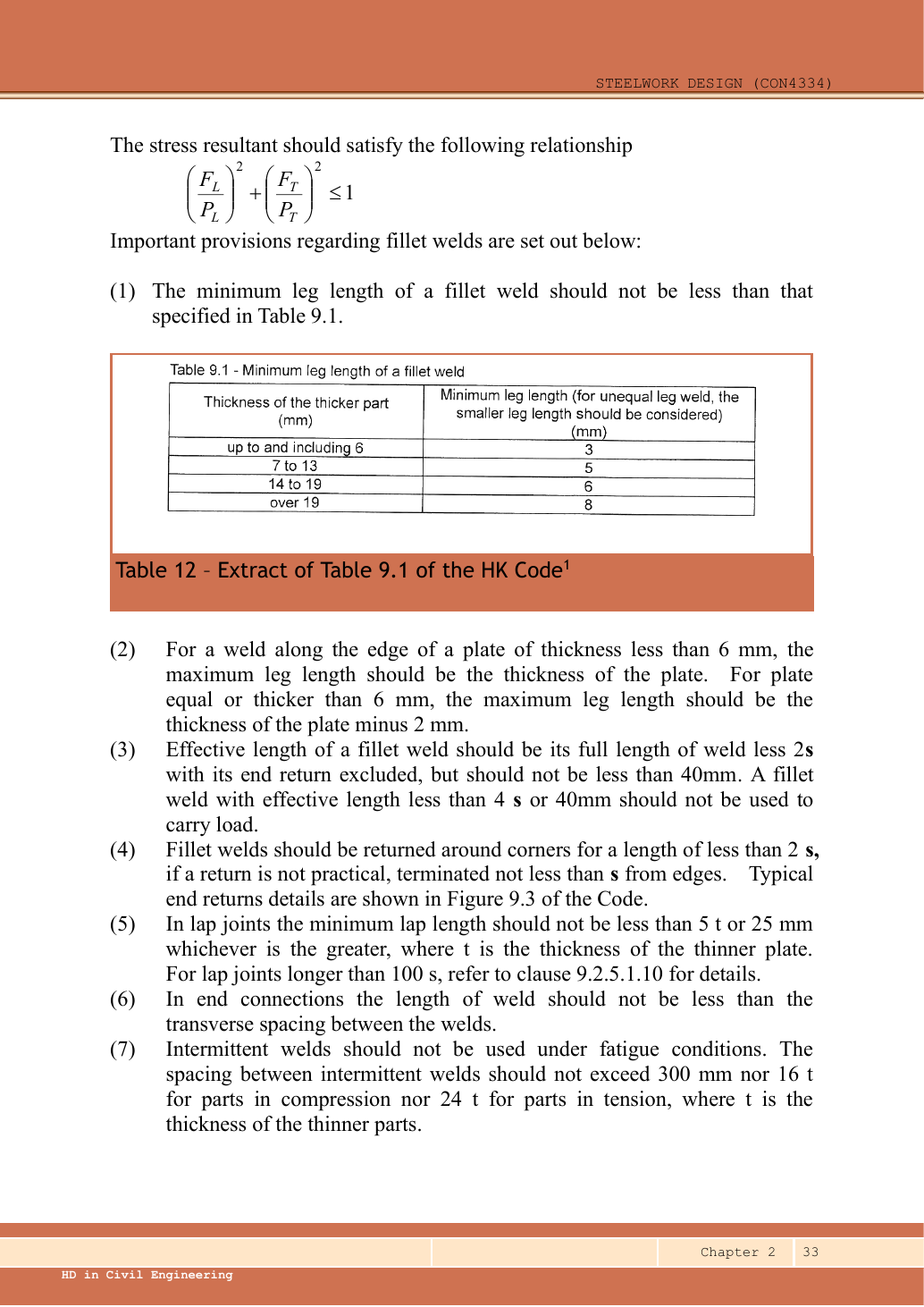
sweb,max=t−2=7.1−2=5.1 mm,sflange,max=T−2=10.7−2=8.7 mms_{web,max}=t-2=7.1-2=5.1\,\mathrm{mm},\quad s_{flange,max}=T-2=10.7-2=8.7\,\mathrm{mm}

Strength alone passes, but the given 6 mm web and 10 mm flange edge welds exceed t−2 and T−2 respectively in the course rule. The connection cannot be called fully adequate as an ordinary edge-fillet detail.

Compact exam answer — key result lines
P=252 kN,M=Pe=252(200)=50400 kN mmP=252\,\mathrm{kN},\quad M=Pe=252(200)=50400\,\mathrm{kN\,mm}
z=D−T=304.4−10.7=293.7 mm,Ff=M/z=50400/293.7=171.603677 kNz=D-T=304.4-10.7=293.7\,\mathrm{mm},\quad F_f=M/z=50400/293.7=171.603677\,\mathrm{kN}
Vw,Rd=2(250−2(6))(0.7)(6)(250)/1000=499.8 kNV_{w,Rd}=2(250-2(6))(0.7)(6)(250)/1000=499.8\,\mathrm{kN}
Ff,Rd=(120−2(10))(0.7)(10)(250)/1000=175 kNF_{f,Rd}=(120-2(10))(0.7)(10)(250)/1000=175\,\mathrm{kN}
sweb,max=t−2=7.1−2=5.1 mm,sflange,max=T−2=10.7−2=8.7 mms_{web,max}=t-2=7.1-2=5.1\,\mathrm{mm},\quad s_{flange,max}=T-2=10.7-2=8.7\,\mathrm{mm}

Strength alone passes, but the given 6 mm web and 10 mm flange edge welds exceed t−2 and T−2 respectively in the course rule. The connection cannot be called fully adequate as an ordinary edge-fillet detail.

Reusable procedure and common errors

  1. Draw the load-transfer stages. Count bolts and shear planes for one stage, then compare all failure modes.
  2. Resolve eccentric forces as vectors. Never add perpendicular components arithmetically.
  3. Use effective weld length and check size limits after strength; “strong enough” does not fix an impossible detail.

Independent practice — invented variant

Invented variant: all applied loads are 10% larger but geometry is unchanged. What scales, and what does not?

Hint

Isolate one load-transfer stage, then distinguish demand from fixed resistance.

Reveal answer

For these linear elastic models, bolt forces and weld force per unit length rise 10%; required strength-only weld throat also rises 10%. Bolt areas, section capacities, effective lengths of already specified welds and detailing limits stay unchanged. Recheck every utilisation.